
 BACK TO MARKET SIGNALS
The Road to Coherence: Ensuring Alignment Between Core and Supplemental Materials
Many districts rely on both core and supplemental materials, but misalignment can lead to fragmented learning experiences. Explore new data on instructional materials and learn what steps can improve coherence across an instructional system.


The Center for Education Market Dynamics • March 26, 2025
NAEP achievement data and state assessments show that many students aren’t gaining the skills and knowledge they need for academic and professional success. These results demonstrate the need to examine the learning environments and resources students experience as one part of the solution. CEMD collects annual data on districts’ instructional systems, including the core and supplemental materials they choose. The findings shed light on the inputs into instructional systems, and raise questions about how well the materials are working in concert to support student learning.
Analysis shows that high-quality math curricula are more available than ever. CEMD’s recent report highlights that more districts are adopting high-quality instructional materials nationwide. Today, almost 50% of districts in CEMD’s sample have a high-quality core math curriculum for K–8 students. This provides the foundation for instructional coherence and the consistent alignment of all aspects of a student’s learning experience.
However, new data that layers in the selection of supplemental materials reveals opportunities for districts looking to increase coherence across the complex environments shaping their instructional systems.
How Much Is Too Much?
Most districts in the sample chose a single core curriculum for math in elementary and middle school grades, which aligns with the guidance and recommendations from the majority of states and instructional experts.
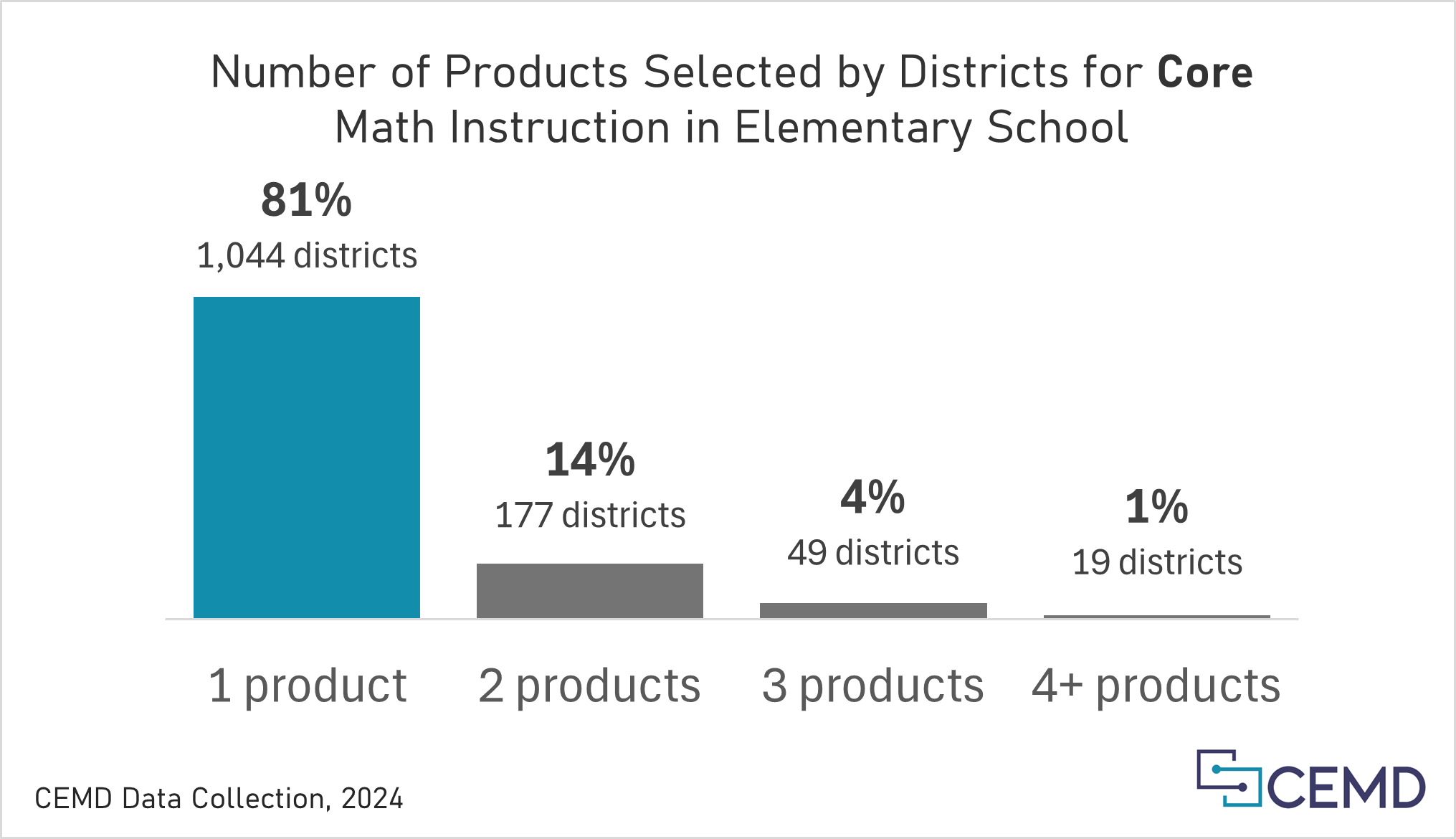
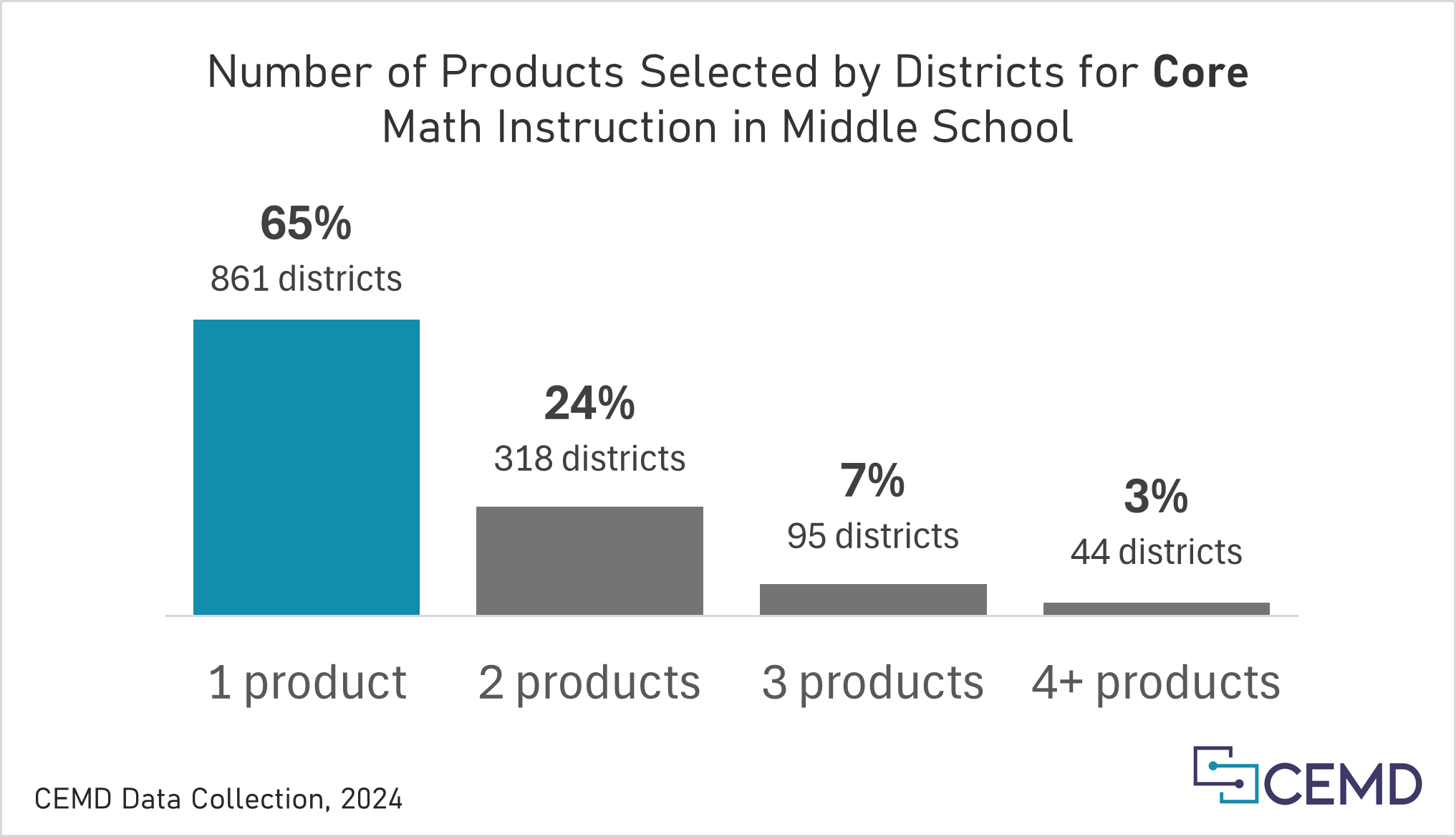
In addition to core materials, many districts have also selected a wide range of supplemental programs. The volume of supplemental products observed raises questions about the extent to which the core materials are being used and implemented, and how connected the overall learning environment is when many different programs are involved.
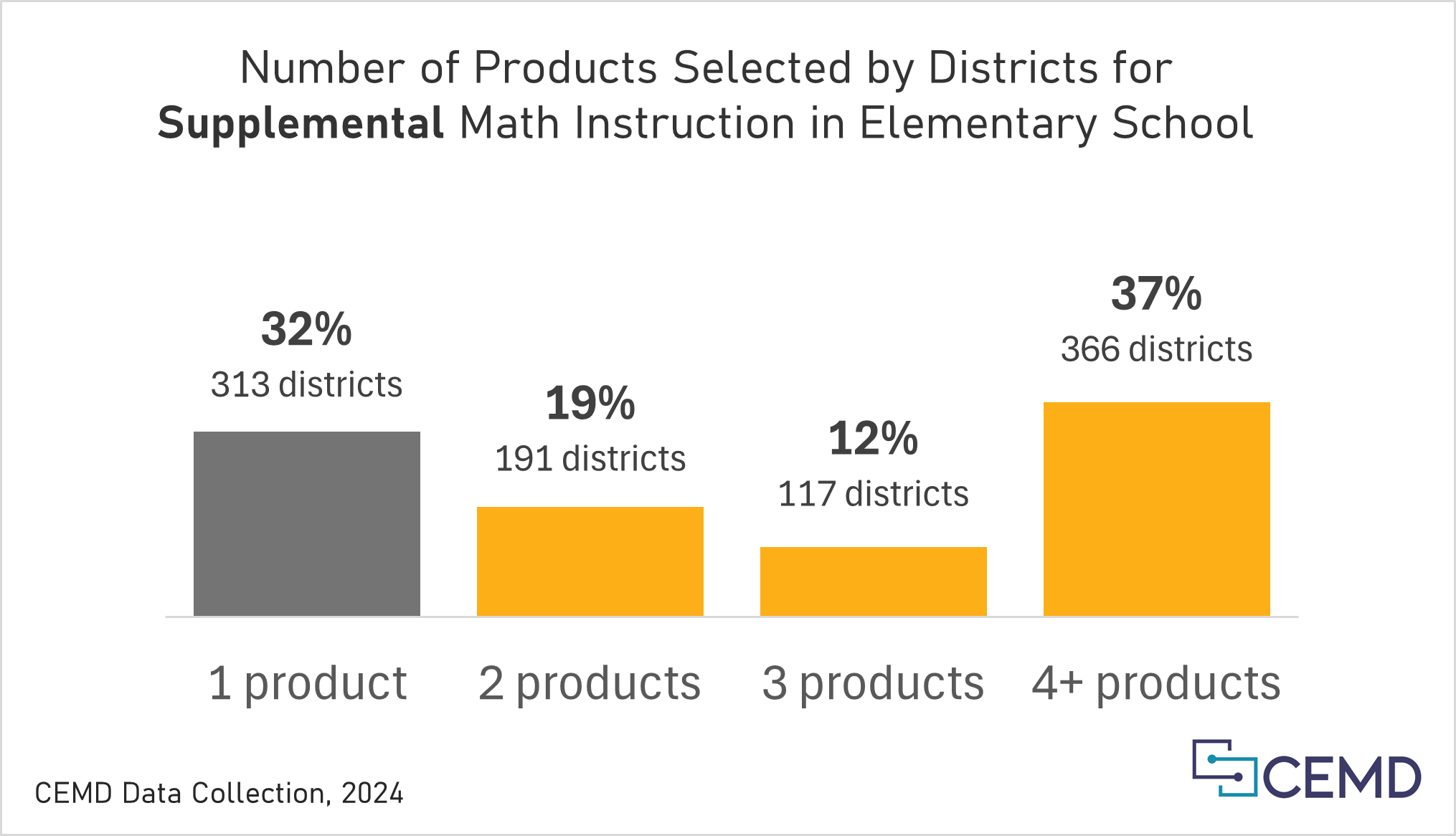

In CEMD’s sample, over 30% of districts chose four or more supplemental math products. This means that schools and teachers are likely working with multiple district-approved resources, which can make navigating the learning experience more complex. This complexity is often compounded because teachers, coaches, and school leaders also select additional materials on top of what the district recommends. As a result, the instructional environment can become fragmented in ways that extend across the district and into individual schools and classrooms.
Although most districts stick to one core curriculum, a sizable number chose multiple core products. For example:
- Nearly one in five districts serving elementary schools selected more than one core curriculum.
- Over a third of districts serving middle schools have multiple core products, and 10% have three or more.
These findings signal a need to better understand the motivations of these districts.
The data also shows that some districts indicated they’re using products designed to be supplemental materials as their core curriculum, and vice versa. This raises questions about why districts are choosing materials for uses that don’t align with how providers design and intend the products to be used. More research is needed to understand why districts make these choices and what impact it has on instructional quality and coherence.
What Does This Mean for Districts?
These findings raise critical questions and considerations for district leaders and organizations that support instructional improvement:
- Consider the student and family experience and perspective—does the set of materials feel intentional and connected, or fragmented?
- What are the strengths and gaps in the core materials, and how do the supplemental programs in place help fill those gaps and support effective instruction?
- What supplemental and intervention materials are being used across and within schools, and how long are they expected to stay in use?
- Could stronger core materials reduce the need for so many supplemental products?
- How can school leaders get better support and guidance when evaluating and selecting materials for their schools?
- What systems are in place to regularly review and manage instructional materials, and make deliberate decisions, so schools don’t have an ongoing pileup of new resources without a clear plan?
Understanding the perspectives of practitioners that work directly with schools and districts to improve instruction is critical to make progress on the challenges around instructional coherence and to provide better support. Join the conversation here.

